
Can You Use Retinol with Vitamin C, Niacinamide, Acids and Peptides? A Complete Skincare Guide
Friday 18th September 2026
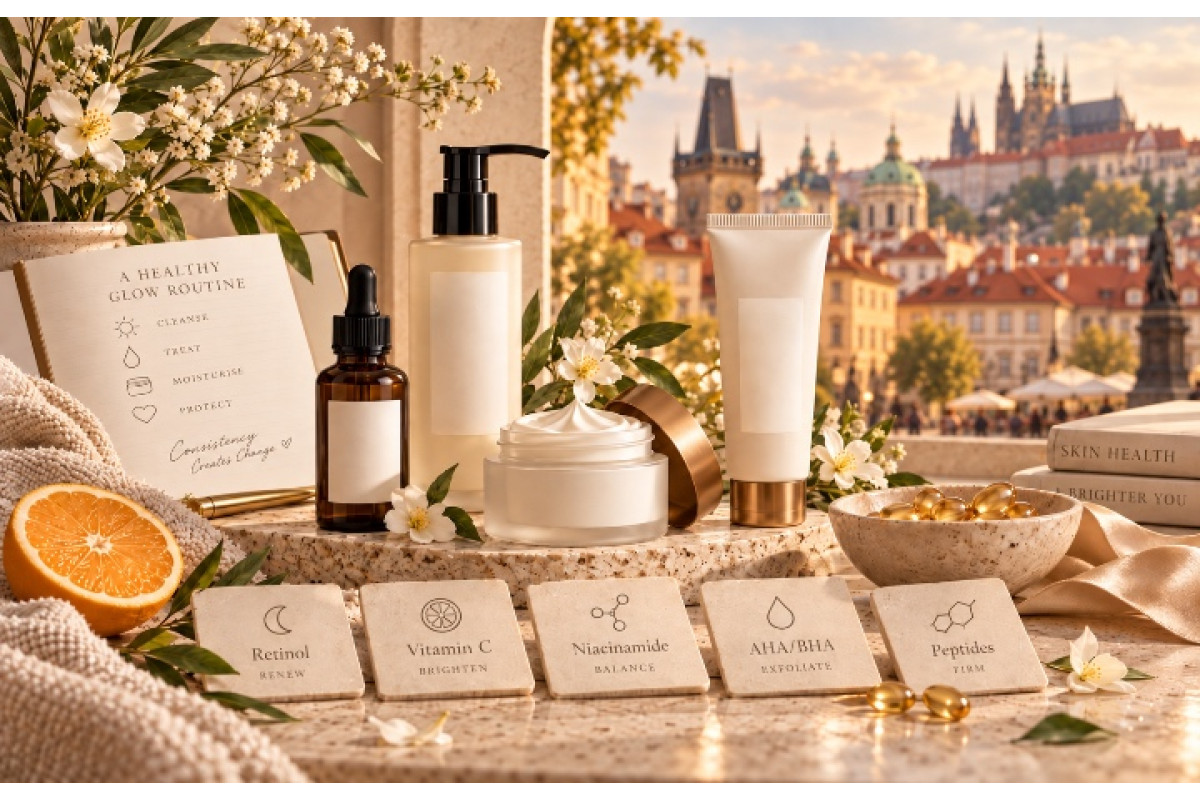
Retinol at night and vitamin C in the morning? Niacinamide with acids? Peptides and retinol in the same routine? Once you start using targeted skincare actives, a simple routine can quickly feel like a list of rules and prohibitions. The more useful question, however, is not simply “can these ingredients be mixed?” It is: does your skin tolerate them, is the formula designed to be used this way, and is the routine simple enough to follow consistently?
Many ingredients that are described online as “incompatible” can even appear together in a finished cosmetic formula. Others are not chemically forbidden together, but may cause unnecessary dryness, stinging or irritation when layered too aggressively. The safest approach is therefore to build a routine around one or two priorities, introduce one active at a time and let skin tolerance and the manufacturer’s instructions determine frequency.
Key principle: the best routine is not the one with the most active ingredients. It is the one your skin tolerates and you can use consistently.
Quick guide: which skincare actives can be used together?
- Vitamin C + niacinamide: generally yes. Modern formulations can be used in the same routine; sensitive skin may prefer to separate them between morning and evening.
- Retinol + niacinamide: often a practical combination. Niacinamide can fit well into a routine that also focuses on barrier support.
- Retinol + vitamin C: both can belong in the same overall routine, but vitamin C in the morning and retinol at night is often the simplest approach.
- Retinol + AHA/BHA: not an absolute prohibition, but this pairing has a higher irritation potential. Alternating nights is a sensible starting point for many people.
- Retinol + peptides: generally compatible. The complete formula still matters, especially if the peptide product also contains exfoliating acids or other strong actives.
- Vitamin C + acids: possible, but a low-pH vitamin C formula layered with a strong AHA/BHA exfoliant can be too intense for reactive skin.
- Hyaluronic acid, ceramides and moisturising ingredients: usually the easiest partners for retinol, vitamin C and acids because they help maintain hydration and comfort.
Before you combine products, understand what each active does
Retinol
Retinol belongs to the vitamin A-derived retinoid family. It is widely used to improve the visible appearance of uneven texture, pigmentation, fine lines and other signs of skin ageing. Its main limitation is tolerability: when first introduced, it can cause dryness, flaking or redness. That is why it is usually better to begin with a few applications per week on dry skin and increase frequency only if the skin remains comfortable.
Within the Wellness Expert catalogue, Collistar Attivi Puri Retinol + Panthenol Renewing Anti-Redness Drops 30ml is one example of a retinol treatment paired with panthenol. Hikari Night Expert Cream 50ml is another night-care example built around retinol and additional anti-ageing support ingredients.
Vitamin C
“Vitamin C” does not describe a single type of formula. L-ascorbic acid and vitamin C derivatives differ in stability, pH, concentration and skin feel. In general, vitamin C is chosen for antioxidant support, radiance and the appearance of a more even-looking tone. Many people prefer it in the morning before moisturiser and sunscreen.
Examples available at Wellness Expert include ACM Duolys CE Intensive Anti-Oxidant Serum 15ml, whose product information lists 15% pure vitamin C; NovExpert Paris Booster with Vitamin C 30ml, based on stabilised forms of vitamin C; and SesDerma C-VIT 5 Liposomal Serum 30ml, formulated with multiple forms of vitamin C.
Niacinamide
Niacinamide, a form of vitamin B3, is a versatile skincare ingredient used in formulas designed for barrier support, the appearance of pores, oiliness, uneven-looking tone and general skin comfort. It is usually well tolerated, which is one reason it can be relatively easy to combine with other actives.
A useful example in the Wellness Expert catalogue is Collistar Attivi Puri Salicylic Acid + Niacinamide Anti-Blemish Oil Control Cream 50ml. Salicylic acid and niacinamide already coexist in the same finished product, which is a good reminder that there is no universal rule saying “niacinamide and acids must never be used together”. A manufacturer-designed formula should be considered as a complete system.
AHA and BHA acids
AHAs such as glycolic and lactic acid mainly work at the skin surface and are commonly used for smoother texture and brighter-looking skin. The best-known BHA, salicylic acid, is oil-soluble and is frequently chosen for clogged pores and blemish-prone skin. The main practical risk is not a dramatic chemical reaction between cosmetics; it is over-exfoliation — persistent burning, tightness, flaking and a disrupted skin barrier.
Peptides
Peptides are a very broad family of ingredients. In cosmetics they are used in anti-ageing, firming and supportive formulas. Different peptides work in different ways and the strength of clinical evidence varies by peptide and formulation, so they are best assessed as part of the finished product rather than treated as one “miracle” category. Casmara RGnerin Wrinkle Serum 50ml, for example, combines glycolic and lactic acids with the peptide Argireline — another practical illustration of why real formulation matters more than simplified social-media rules.
The most common combinations, explained practically
Vitamin C + niacinamide
For most people this is a reasonable pairing. If both products are comfortable on the skin, they can be layered in the same routine. If your vitamin C product is very acidic or your skin stings easily, use vitamin C in the morning and niacinamide in the evening. Separating them across the day does not mean you are “losing” the benefits of either ingredient.
Retinol + niacinamide
This can be a useful combination for someone introducing retinol while also prioritising skin comfort and barrier support. A simple evening routine might be gentle cleansing, niacinamide, retinol according to product instructions and a moisturiser. If retinol is irritating, simplify further or use moisturiser before and/or after retinol depending on the product texture and instructions.
Retinol + vitamin C
You do not need to choose one or the other. One of the easiest structures is vitamin C in the morning and retinol at night. This separates the two active steps and reduces the number of potentially stimulating layers in a single application. If a product is specifically formulated to combine ingredients, follow the instructions for that formula rather than applying generic rules.
Retinol + AHA/BHA
This is the combination that deserves the most caution. Retinol and exfoliating acids can both increase dryness and sensitivity, particularly during the first few weeks. If you want to use both, start by alternating: for example, retinol on Monday and Thursday, an exfoliant on one different night, and the remaining nights focused on hydration and barrier support. Higher frequencies make more sense only after your skin has clearly adapted.
Vitamin C + AHA/BHA
This can work, but there is rarely a need to force them into the same application. A low-pH vitamin C formula plus a strong exfoliating acid can make a routine unnecessarily aggressive. An easy option is vitamin C in the morning and the acid at night, or to alternate days. If one finished product already contains vitamin C and acids, there is no reason to “separate” ingredients that were formulated together — follow the manufacturer’s protocol.
Retinol + peptides
For many anti-ageing routines, this is a logical combination. Peptides can be used in the morning while retinol remains an evening step, or they may be used in the same routine if both formulas feel comfortable. With copper peptides or highly complex formulas, follow brand-specific directions rather than applying a blanket rule to every peptide product.
Four simple routines based on your main goal
1. Dullness and visible uneven pigmentation
Morning: gentle cleanse → vitamin C → moisturiser → broad-spectrum SPF 30 or higher.
Evening: cleanse → niacinamide or hydrating serum → moisturiser. After several stable weeks, retinol can be introduced on selected evenings if appropriate.
2. Fine lines and loss of firmness
Morning: vitamin C or peptides → moisturiser → SPF.
Evening: cleanse → retinol 2-3 times per week at first → moisturiser with hydrating/barrier-support ingredients. On non-retinol nights, use peptides or keep the routine purely moisturising.
3. Combination skin, clogged pores and blemishes
Morning: gentle cleanse → niacinamide → lightweight moisturiser → SPF.
Evening: BHA on selected nights; on other nights, keep the routine simple and hydrating. Retinol can be added gradually, preferably on separate nights from BHA at first.
4. Dry, dehydrated or easily reactive skin
Here the priority is not “which active should I add?” but barrier condition. Gentle cleansing, humectants, ceramides and a suitable moisturiser come first. Collistar Attivi Puri Hyaluronic Acid + Ceramide Aquagel 50ml is one example of a formula focused on hydration and barrier support. Only when the skin feels stable should you introduce one targeted active at a time.
How to introduce actives without overwhelming your skin
- Change one thing at a time. If you start retinol, an acid and vitamin C simultaneously, it becomes difficult to know what is helping and what is irritating.
- Start with a low frequency. This matters especially with retinol and exfoliating acids. More frequent use does not automatically mean better results.
- Use the recommended amount. Follow manufacturer directions; a thicker layer does not turn a cosmetic product into a more effective treatment.
- Support the skin barrier. Include moisturising ingredients, ceramides and a moisturiser that suits your skin type.
- Use sunscreen every morning. This is particularly important when using retinoids or exfoliants. Vitamin C and antioxidants can complement photoprotection, but they do not replace sunscreen.
- Pay attention to skin signals. Mild adjustment can occur with some actives, but persistent burning, swelling, significant itching or increasing redness are reasons to stop and reassess.
Common mistakes
- Using three or four active serums simply because each one offers a different benefit.
- Increasing retinol frequency while the skin is still dry or flaking.
- Exfoliating frequently and then adding retinol on the same night.
- Assuming that stinging and irritation mean “the product is working”.
- Changing the entire routine every few days without allowing the skin to adapt.
- Ignoring sunscreen while trying to improve dark spots and photoageing.
When extra caution is needed
During pregnancy or when trying to conceive, retinoids and retinol products should be avoided; for other actives, especially at higher concentrations, ask your healthcare professional for personalised advice. If you have rosacea, eczema, active dermatitis, significant acne or a severely compromised barrier, an aggressive do-it-yourself active routine may make symptoms worse. In those cases, a dermatologist can help determine a more appropriate plan.
Conclusion: build a routine, not a collection of actives
Retinol, vitamin C, niacinamide, AHA/BHA and peptides do not all need to compete for a place in the same evening routine. They can serve different purposes at different times of the day or week. For most people, the most sustainable approach is simple: one main goal, one targeted active, adequate hydration and daily sun protection. Once the skin is stable, a second active can be added gradually.
The Wellness Expert catalogue includes professional and dermocosmetic options from brands such as Collistar, ACM, NovExpert, SesDerma, Casmara and Hikari Laboratories, covering vitamin C, retinol, acids, niacinamide, peptides and barrier-support care. The best choice is not necessarily the product with the longest ingredient list, but the one that addresses your skin’s real priority and fits into a coherent routine.