
How to choose a face mask: hydrating, cleansing or alginate?
Monday 28th September 2026
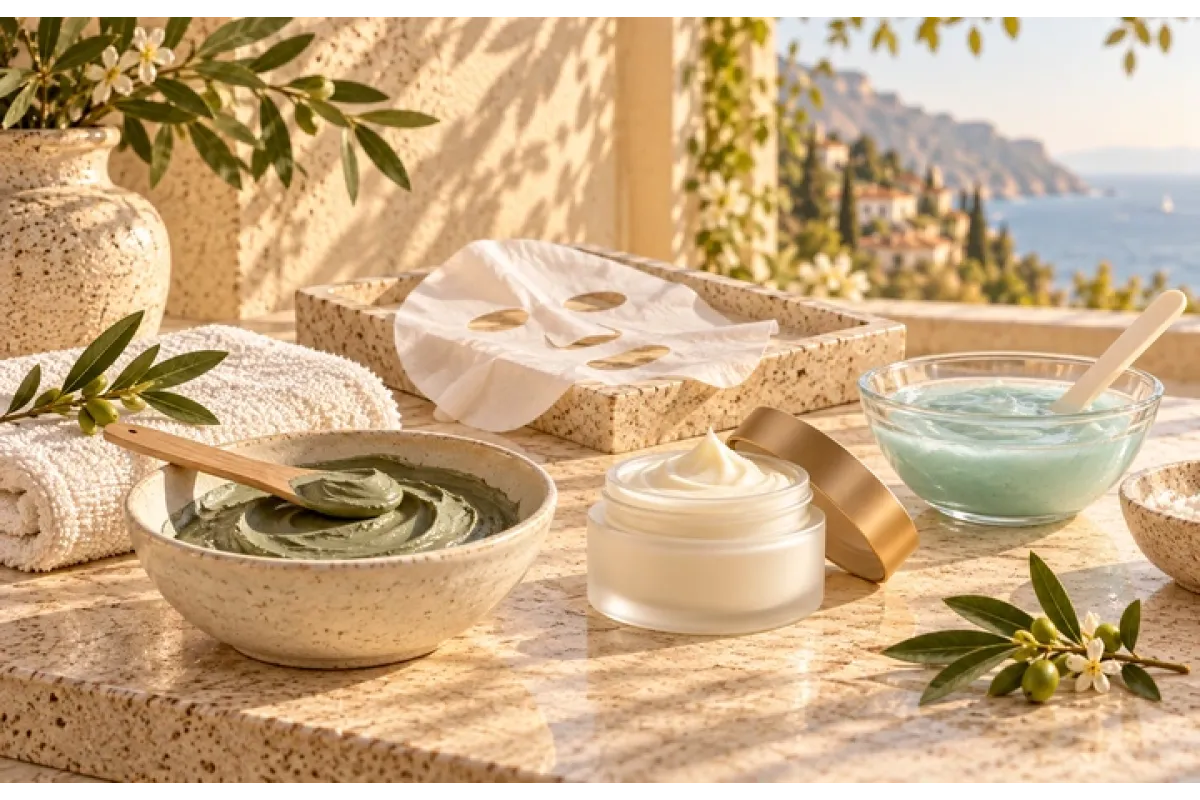
A face mask should have a clear purpose: extra comfort after cleansing, less shine in the T-zone or a smoother canvas for make-up. Yet “hydrating”, “cream” and “alginate” often appear side by side as though they describe competing choices. The first describes a skincare goal; the others describe a format. Understanding that distinction makes it easier to find a product that fits both your skin and the time you want to spend using it.
By Mila Serani, Skincare & Beauty Editor at Wellness Expert.
Choose the skincare goal before the format
Before buying, ask what you want to change right now. Setting aside a little time for yourself is a good reason to enjoy a mask, but choosing a formula needs a more specific starting point. Does your skin feel tight? Are your cheeks dry while your nose shines? Would you like a fresher appearance before an event? Pick one priority. A suitable mask is usually easier to understand and use than several products applied one after another.
Hydration and softness
If cleansing leaves your skin uncomfortable, consider a hydrating formula. Glycerin and hyaluronic acid help retain water, while emollients soften the surface. Dry skin may prefer a richer cream texture; combination skin may enjoy something lighter. Shine alone does not rule out a need for hydration. Assess how your skin feels after using the product rather than choosing solely by a “dry skin” label or an appealing jar.
Cleansing and shine control
Clay and mud masks are worth considering when excess surface oil is the main concern. Kaolin and bentonite are used in formulas to absorb oil. The aim, however, is comfortable skin rather than a squeaky-clean feeling. On combination skin, a cleansing mask may only be useful on the forehead, nose and chin. There is no need to apply the same product to dry cheeks simply to cover the whole face.
Comfort for sensitive skin
Tolerance of the complete formula matters more than a promise of instant results. Consider ingredients you have reacted to before, and do not treat “natural” or “professional” as guarantees. Try a new product on a small area according to its instructions. If your skin is already irritated, introducing a mask can wait. Persistent redness, itching or soreness calls for a dermatologist’s advice rather than a search for a stronger cosmetic product.
A fresher look before an event
A familiar hydrating mask that your skin already tolerates is a sensible choice here. Keep expectations realistic: softness and a smoother appearance do not establish a lasting lifting effect. Read words such as “radiance” and “firmness” alongside the product’s purpose, ingredients and directions. Save a first experiment with an intensive exfoliating treatment for another day.
A quick guide to choosing
| What you notice | What to consider | What to check |
|---|---|---|
| Tightness and dry patches | A hydrating cream or gel mask | Comfort afterwards and whether you need moisturiser |
| Shine mainly in the T-zone | A cleansing mask on those areas | Avoid drying out drier parts of the face |
| Skin prone to sensitivity | A familiar soothing formula | Tolerance, fragrance and your skin’s current condition |
| You want a simple, short ritual | A sheet or ready-to-use cream mask | Application time and how to remove the residue |
| You enjoy mixing a treatment | An alginate mask | Kit contents, proportions and ease of application |
How the main formats differ
Cream and gel masks
A ready-to-use texture is a convenient introduction to masks: there is nothing to mix, and you can control how much goes on each area. Cream formulas range from light to rich, while gels often appeal to people who prefer a less substantial layer. Texture does not replace reading the ingredients, though. A gel can contain intensive actives, and a cream mask is not automatically right for every person with dry skin.
Sheet masks
A sheet soaked in a formula is convenient for a single application and needs no separate brush. Check the fit and read whether the remaining product should be rinsed away. Remove the sheet on time; a dried-out sheet offers no reason to extend the session. Do not assume it can stay on overnight. If hydration is the goal, look for that purpose in the formula rather than choosing by the sheet material alone.
Alginate masks
This format uses alginates, substances obtained from brown seaweed. Depending on the system, components are mixed with water or a supplied activator and set into a flexible layer. An alginate mask is not necessarily an exfoliating peel: removing a set layer and applying exfoliating acids are different processes. You will need a bowl, a spatula and careful attention to proportions. Prepare everything before mixing, because the application window is limited. For home use, choose a kit with clear directions and check which areas you may cover. Do not copy a salon technique that covers the eyes or lips without instructions permitting it.
Overnight masks
An overnight mask is specifically designed to stay on the skin for an extended period. That describes its method of use; it does not make every mask suitable for bedtime. Check whether the product replaces your evening moisturiser or goes on afterwards. If your usual cream already keeps your skin comfortable, another rich layer may be unnecessary.
Examples from the Wellness Expert range
- Biodroga Bioscience Mask Sensation Hydra Boost Mask: a hydration-focused example; the manufacturer’s formula lists glycerin and sodium hyaluronate.
- Anna Lotan Clear Astringent Mud Mask: a mud mask intended for cleansing care of oily skin.
- Anna Lotan Barbados Mask: an example of a light mask aimed at comfort for sensitive combination skin.
- Casmara 2070 Goji Red Mask: an example of the alginate format; check the pack contents and mixing instructions before buying.
These examples illustrate different approaches. Choose a specific product using its current listing, full INCI ingredients and packaging instructions. Formulas and availability can change, and a familiar brand name does not rule out an individual skin reaction.
How to fit a mask into your routine
- Cleanse gently. Remove make-up and surface impurities; a mask does not replace a cleanser.
- Read the directions before applying. Check the amount, permitted areas, application time and removal method. Do not add a serum underneath unless the product’s protocol calls for it.
- Set a timer. Leaving a mask on longer does not guarantee better results. Do not turn an ordinary rinse-off mask into an overnight treatment.
- Finish as directed. The residue may need rinsing, removing or massaging in, depending on the formula. Follow with moisturiser if needed; in the morning, finish your routine with sun protection.
Common mistakes to avoid
One is judging performance by the intensity of the sensation. Burning does not prove effectiveness. If discomfort develops, remove or rinse off the product and stop using it. Another is combining a cleansing mask, a scrub and an acid treatment in pursuit of a stronger result. Count the mask as part of your whole routine, especially when that routine already contains exfoliating actives.
There is no universal “twice a week” schedule for every mask. Start with the manufacturer’s recommended frequency and consider your skin’s response. Do not mix different products in one bowl: applying separate formulas to different areas and altering a finished formula are different decisions.
Do you need a mask if you already have a good moisturiser?
A mask can be a useful addition and an enjoyable ritual, but it is an optional purchase. If your skin feels comfortable and your regular routine suits it, you can manage without one. Choose a mask when you understand its purpose and can follow its directions. A good purchase is easy to use and leaves your skin feeling comfortable.
Further reading: American Academy of Dermatology — facial masks in skincare; DermNet — emollients and moisturisers; Biodroga — Hydra Boost Mask; Casmara — Goji Mask 2070.