
Facial exfoliation: enzymes, acids or a scrub — How to choose
Monday 05th October 2026
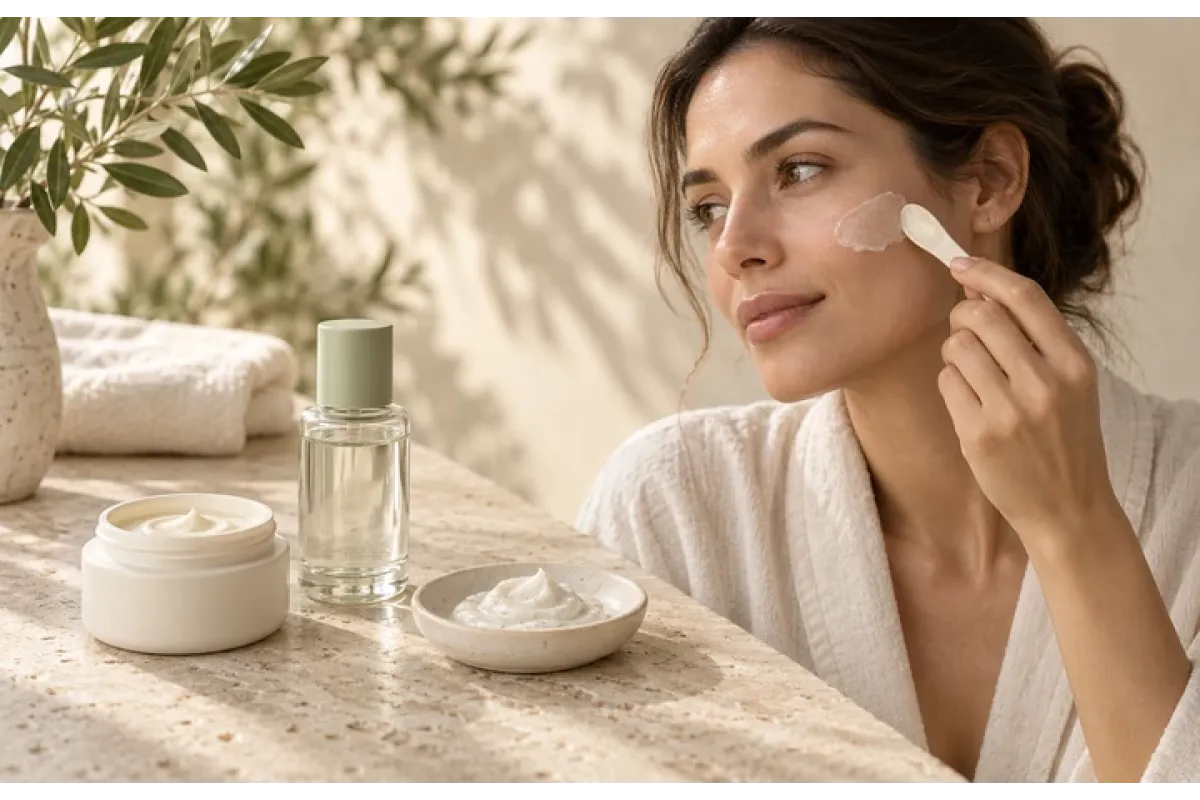
The exfoliation shelf can be confusing: a grainy scrub, an enzyme mask, an acid lotion and a gommage sit side by side. They all belong to exfoliating skincare, but their directions can be quite different. Your skin's current condition, the products you already own and the steps specified by the manufacturer matter when choosing. Start with the purpose and directions, then compare names and ingredients. This makes it easier to give a new product a clear role and avoid buying several versions of the same step.
By Mila Serani, Skincare & Beauty Editor at Wellness Expert
First decide whether you need a separate exfoliant
Exfoliation is intended to remove dead cells from the skin's surface. It does not replace daily cleansing and need not become a compulsory purchase simply because it appears in somebody else's routine. If you are happy with how your skin looks and feels with your current care, an additional step may be unnecessary. If you want to address roughness or the appearance of uneven texture, first work out what each existing product already does.
Make a short list: cleanser, toner, serum, moisturiser and occasional treatments. Check whether any already claims an exfoliating function. A new peel may turn out to be the second or third product doing a similar job. Consider the format you actually enjoy, too: would you prefer a separate rinse-off treatment, or a product that fits into your usual routine? Choose directions you can follow comfortably, without rushing through a procedure.
Three approaches: particles, enzymes and acids
A scrub: mechanical exfoliation
A scrub involves particles and the movement over the skin described in its directions. Assess both the formula and the way it is used. Rice powder, mineral grains or plant origins do not, by themselves, tell you which level of exfoliation suits you. Look for skin-type restrictions, whether skin should be damp before application and the massage instructions. Avoid adding a brush or another tool for a stronger effect unless the product is specifically intended to be used that way.
An enzyme exfoliant: check how it is removed
Here, exfoliation involves enzymes; the product may be a mask or another format with a defined application time. The word “enzyme” does not explain the entire procedure. Some products rinse off, while others allow gommage, or removal through circular massage. That adds a mechanical step to the formula. Before purchasing, establish whether you must wait for it to dry, moisten the film or massage the skin. An enzyme label does not automatically make every product suitable for sensitive skin.
An acid exfoliant: assess the complete formula
Acids appear in lotions, masks and peels. Sharing an ingredient name does not make these products interchangeable. The FDA notes that AHA action depends on the acid, concentration, pH and other ingredients. If a percentage or pH is not published, do not guess it from an ingredient's position in the list. Check the stated purpose and restrictions first. Compare a professional peel and a home-use lotion in the context of their intended use.
A comparison table for choosing
| Your priority | What to consider | What to clarify |
|---|---|---|
| A rinse-off treatment with massage | A scrub intended for your skin type | Particles, skin dampness, restrictions and rinsing method |
| A mask with an exfoliating purpose | An enzyme formula | Application time and removal: rinsing or gommage |
| An acid step in your usual care | A product with clear home-use directions | Rinsing, frequency, warnings and other active products |
| Your routine already includes exfoliation | Assess the current routine first | What a second product is meant to add |
This table compares ways of using products; it does not prescribe one on the basis of a single feature. Oily shine does not automatically mean you need a scrub, and dryness does not mean that flaking should be treated with a peel. Consider your skin's current condition and the specific formula's description. If you have significant discomfort, a skin condition or uncertainty about the cause of changes, discuss your choice with a dermatologist.
Examples from the Wellness Expert selection
These products illustrate differences between formats. They are not a set to be used together.
- Ainhoa Skin Primers Rice Facial Scrub contains rice powder and silica; the listing excludes sensitive and acne-prone skin. Check its current directions when choosing.
- Anna Lotan Classic Enzymatic Gommage Peeling 50ml is an enzyme mask with a gommage removal option. Consider the whole procedure, including removal.
- Anna Lotan New Age Control Exfoliating Freshener 200ml is an acid toner. The manufacturer specifies daytime broad-spectrum protection of at least SPF 30.
A separate example is Ainhoa Skin Primers Glycolic Acid 50ml: its listing specifies a professional protocol. Do not choose it as an ordinary home-use toner. Catalogue availability does not change its intended use.
Rinse-off and leave-on products involve different steps
Before buying, picture the process from beginning to end. Does it require dry or damp skin? What amount is specified? Is there a waiting time, rinsing, sponge removal or a subsequent product? These details determine how convenient the format will be. Do not transfer a mask's application time to a liquid lotion or leave a rinse-off peel on overnight. The texture or clarity of a liquid cannot replace its directions.
If the description does not explain how to use the product, clarify this before application. With acid products, sun warnings also matter: the FDA recommends sun protection during AHA use and for a week afterwards. Follow the recommendations on the packaging. Autumn does not cancel these directions or provide a reason to choose a more intensive peel.
Consider your toner, retinol and existing skincare
Check your toner's purpose: it may be hydrating or already exfoliating. We explain the difference in our guide to choosing a facial toner. If your routine includes an acid lotion, first establish why another form of exfoliation would be useful. Different packaging can conceal a similar function, and a pleasant texture does not mean a product is free of active ingredients.
The AAD notes that exfoliation alongside retinol or benzoyl peroxide may worsen dryness. Keep this in mind when comparing directions. For prescribed skincare, discuss an additional step with your clinician. Avoid building a universal calendar around “scrub today, acids tomorrow”: the schedule should suit your particular products, rather than fill every day of the week.
Getting to know a new product
Change one part of your routine at a time and keep the directions. For a preliminary check, consult the AAD guidance on testing skincare on a small area; check frequency and contact time against your exfoliant's instructions.
- Read the intended use, restrictions and complete application process before the first use.
- Prepare everything needed for the specified removal method so that you need not improvise during treatment.
- Follow the stated amount and contact time; do not increase them to try to speed up results.
- Assess comfort and convenience before using it again. Stop if a reaction occurs; consult a dermatologist if symptoms are significant or persistent.
Four mistakes that complicate the choice
- Looking for the highest percentage before understanding the formula's intended use.
- Assuming an enzyme or “natural” product suits everyone without checking ingredients and restrictions.
- Buying several exfoliants at once without defining a role for each.
- Judging results only by tingling, the sensation of rubbing or visible flaking.
A useful choice has a clear purpose, an appropriate intended use and directions you can follow. Compare the entire procedure, including removal, its place in your existing routine and the steps afterwards. If a new exfoliant simply makes your care more complicated, return to the original goal: sometimes reviewing a product you already use is enough.